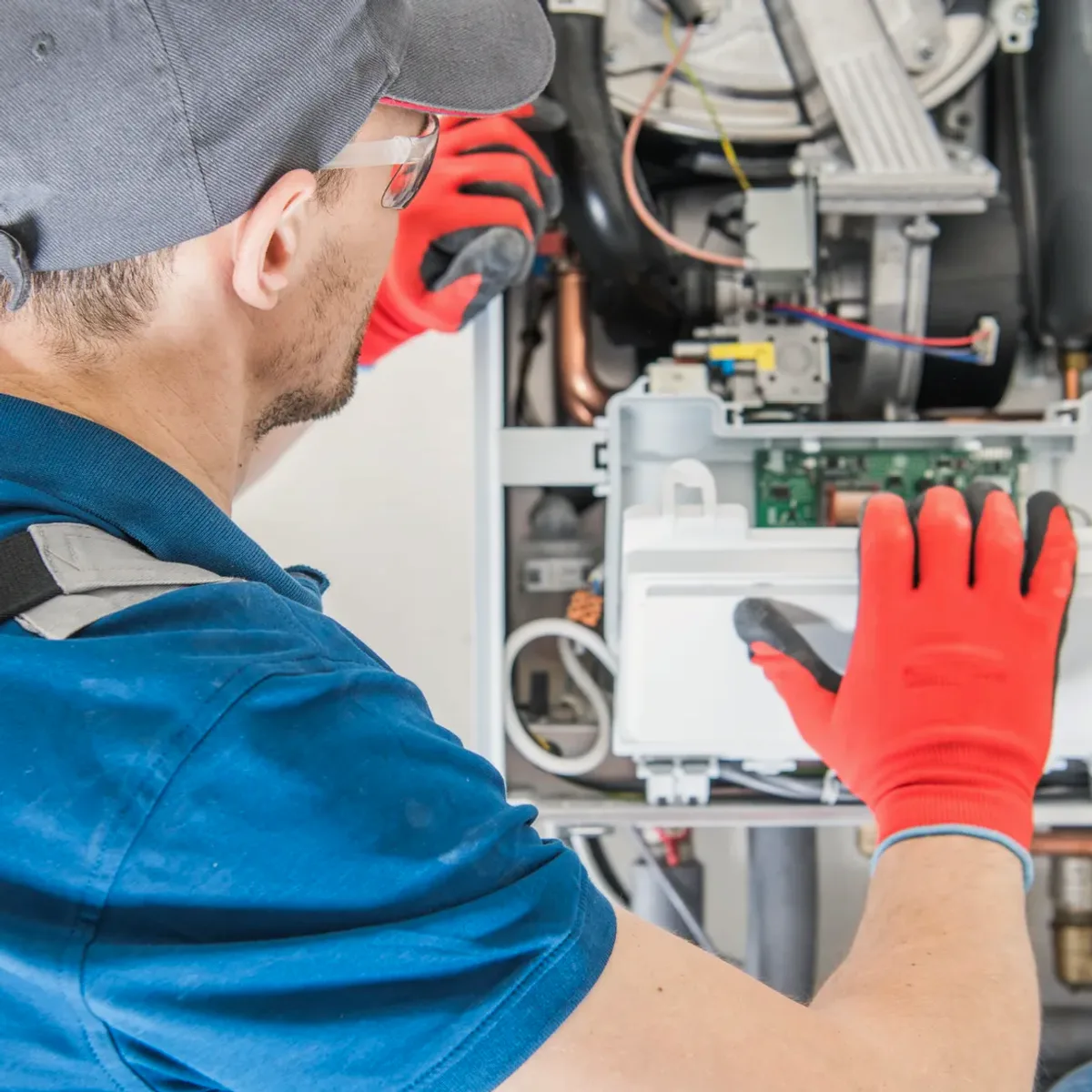
Request boiler service for a property in Tecumseh. Include the equipment, the problem or planned work, and your location so the request can be reviewed.
What findings help diagnose a boiler that loses pressure or leaves radiators cold?
Boiler work depends on both the appliance and the hydronic system it serves. A natural-draft cast-iron boiler connected to radiators differs from a condensing boiler serving in-floor loops in venting, controls, and operating requirements. Gas, propane, or oil fuel also changes the burner and supply arrangements. Symptoms such as no ignition, pressure loss, leaks, cold radiators, or uneven floor heat should be assessed against the specific boiler and distribution system before repair, maintenance, or replacement is selected.
Diagnosis considers fuel and boiler type, the operating sequence, pressure behaviour, visible leakage, venting, and the affected radiators or in-floor loops. Ignition faults differ from circulator or system-pressure problems, while a flue concern raises a separate safety issue. Installation planning also checks distribution and control compatibility. These findings distinguish targeted repair from replacement or manufacturer-directed maintenance.
Natural-draft and condensing boilers using gas, propane, or oil
Radiator and in-floor hydronic distribution, ignition, circulation, and pressure faults
Venting, control compatibility, and repair-versus-replacement decisions
Assessment and Scope
Questions for the Proposed Work
01
Distinguish ignition faults from circulation and pressure problems
A boiler that will not fire may have an ignition, burner, fuel, or control fault, while a running boiler with cold radiators may have a circulation or distribution problem. Pressure loss and visible water require tracing rather than assuming a single cause. The fuel type and appliance design matter: gas, propane, and oil boilers use different burner arrangements, and the symptoms should be interpreted for the specific model.
02
Compare venting and controls across boiler designs
A natural-draft boiler and a condensing boiler have different venting and operating requirements. A flue concern should be assessed as a venting issue, not treated as an enclosure or cabinet problem. Controls and distribution also matter: radiator circuits and in-floor loops may use different control arrangements. For replacement, the proposed boiler must be compatible with the fuel supply, venting route, and hydronic system.
03
Separate repair, replacement, and maintenance decisions
A defined component fault may support repair when the remaining boiler and hydronic system are in suitable condition. A damaged boiler section, recurring major faults, or a significant venting concern can change the decision and prompt replacement assessment. Maintenance should follow manufacturer instructions and inspection findings; flushing is not automatic. The boiler type, water condition, and system design help determine whether any cleaning or other maintenance is warranted.
Compare the next step
Request the present condition and available repair independently of a replacement design. Ask whether a proposed boiler can support the actual emitters, zone controls, and domestic hot-water role, and what related work is required. Compare the complete installed scope and documented load with the repair alternative rather than making the choice from age or nameplate output alone.
Leave fuel, combustion, electrical, and pressure-system work to a qualified contractor. Do not adjust safety devices or repeatedly add water to a system with an unexplained leak or pressure loss.